- Niche Media
- Posts
- 📈 Major Shifts in Niche Media
📈 Major Shifts in Niche Media
Niche media isn’t shrinking. It’s sharpening.

Niche Media
February 05, 2026
Brought to you by Ad Orbit


Welcome to The Niche Fix. Each week, we will share insights from experts and professionals in the niche publishing industry. Have questions or thoughts about the industry? Reply to this email, and let’s chat!
But first…
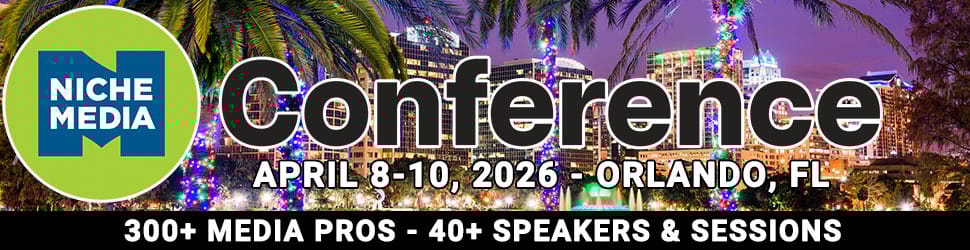
A quick update for readers planning ahead: the 2026 Niche Media Conference is now 50% sold out.
The event takes place April 8–10 in Orlando and brings together publishers, sales leaders, and audience teams for three days of focused sessions around publisher strategy, ad sales, audience growth, digital strategy, and editorial leadership.
If the conference is on your calendar, now’s the time to lock it in. Seats are filling fast, hotels won’t wait, and this one’s shaping up to be a full house.

Now, let’s talk shifts…
The Major Shifts Happening Inside Niche Media Companies

By Zach O’Brien
Every time I talk with publishers, sales leaders, or operators in niche media, I come away with the same feeling: this industry isn’t broken. But it is absolutely being reshaped in real time.
The publishers who are winning right now aren’t necessarily louder or bigger. They’re clearer. They’re more focused. And they’re making fewer assumptions about how media “used to work.”
Here are a few shifts I’m watching closely.
1. Events Are Becoming Core, Not “Extra”
Events used to be a side project. Something you tested when an advertiser asked or when revenue felt tight.
Now they’re becoming core products.
Publishers are launching smaller, more intentional events: half-day workshops, executive roundtables, local meetups, breakfast briefings, and niche-specific conferences. These aren’t massive productions. They’re tightly aligned with the audience and designed to deliver real value.
The biggest shift is mindset. Events aren’t being treated as experiments anymore. They’re being planned, priced, sponsored, and repeated. Predictable revenue. Deeper relationships. Stronger brand authority.
2. Pageviews Matter Less Than You Think (and Social Is Part of That Shift)
Traffic still matters, but the way publishers think about it has changed.
Pageviews alone don’t pay the bills. Engagement does.
Publishers are paying closer attention to email growth, click-throughs, replies, and how often their audience actually shows up. Social media is no longer just a top-of-funnel traffic source. It’s a relationship channel.
We’re seeing publishers use social to:
Test content ideas before publishing
Build trust through behind-the-scenes and POV-driven posts
Support sales by showing advertisers proof of audience engagement
The publishers who treat social like a conversation, not a distribution dump, are seeing stronger results across the board.
3. Smaller Teams, Higher Margins
Lean teams are becoming the norm, not the exception.
Publishers are cutting unnecessary complexity and focusing on what truly drives revenue and growth. AI is helping, but not by replacing people. It’s replacing repetitive tasks and speeding up execution.
The result is fewer handoffs, faster decision-making, and healthier margins. Smaller teams with clear priorities are outperforming larger teams stuck in constant motion.
4. Sales Is Getting Harder (and More Important)
This is the one I hear about the most.
Sales in niche media is becoming more difficult, not easier. Advertisers have more options than ever: social platforms, creators, podcasts, newsletters, influencers, and direct-to-platform tools. At the same time, media companies are offering more products than ever.
Banners. Sponsored content. Email. Video. Events. Lead gen. Social amplification. Custom programs.
More options sound good, but they also create confusion.
Sales teams are being forced to evolve. The days of selling a single ad unit are fading. The publishers who are succeeding are investing in real sales enablement: clear packages, defined outcomes, pilot programs, and strong case studies.
They’re shifting the conversation away from impressions and toward results. And they’re giving sales teams structure instead of telling them to “just sell.”
5. Publishers Are Acting Like Operators, Not Just Editors
This shift is subtle but powerful.
Publishers are thinking in systems. They’re mapping how content feeds email, how email feeds sales, how events feed sponsorship, and how all of it reinforces the brand.
Decisions are being made through an operator lens:
Does this drive revenue or retention?
Can this be repeated?
Who owns this product?
What happens if we stop doing it?
This isn’t about losing editorial integrity. It’s about sustainability.
The most successful publishers right now are deeply audience-first, but they’re also unapologetically business-minded. They understand that great content only thrives when the business behind it is healthy.
That’s what I’m watching. And honestly, it’s why I’m optimistic.
Niche media isn’t shrinking. It’s sharpening.
This issue of the Niche Fix is brought to you by Ad Orbit
Formerly known as MagHub, Ad Orbit helps hundreds of publishers worldwide sell, deliver, and bill for advertising revenue. The contract-to-cash platform combines a Customer Relationship Management (CRM) and Order Management System (OMS) to enable revenue teams to reach maximum effectiveness.
Developed over the last ten years to optimize publisher operations, the solution has evolved from a simple CRM tool to one that spans areas as diverse as:
Ad Inventory Management
Electronic Signatures
Client Portals
Ad Reminders/Proofs/Uploads
Billing
Accounts Receivable
Built-in Business Intelligence (BI) reporting/dashboarding
Service Sales & Project Management
While originally designed for Magazine Publishers, the platform has continued to adapt with the industry to support omnichannel advertising campaigns. Whether your ad runs on owned and operated channels like print, web, newsletters, webinars, OOH, events, and broadcast or via a programmatic distribution network – Ad Orbit helps your team keep everything organized.
Let's Connect!
New to the newsletter? Subscribe for free.