- Niche Media
- Posts
- “Church and State” Is Dead
“Church and State” Is Dead
How smart publishers are uniting editorial and sales to build trust, grow revenue, and serve readers better.

Niche Media
October 09, 2025

Welcome to The Niche Fix. Each week, we will share insights from experts and professionals in the niche publishing industry. Have questions or thoughts about the industry? Reply to this email, and let’s chat!
But first…
Don’t forget to include Niche Media Events into your 2026 budget.
Here’s what’s locked in so far:
Niche Media Conference — April 8–10, Orlando, Florida
Niche Leadership Summit — September 2–4, New Orleans, Louisiana
We’re making 2026 our best year yet. Hope to see you there!
Ryan Dohrn’s Sales Corner: The 4 P’s That Fix Almost Any Sales Slump
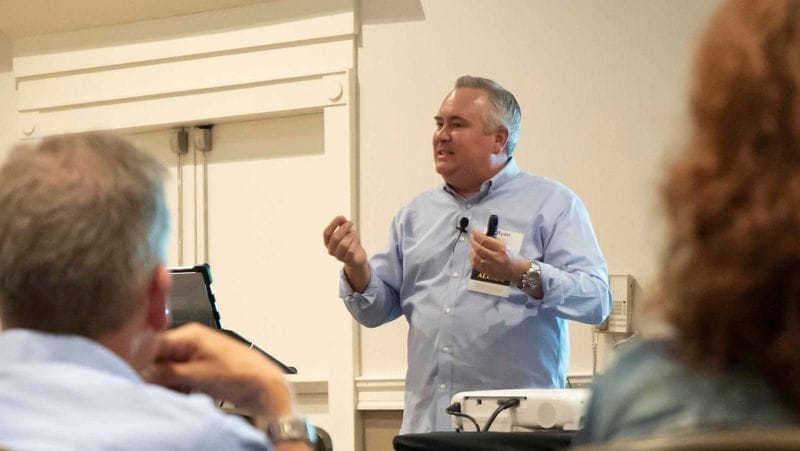
When sales slow down, the first instinct is to blame the price. But veteran media sales coach Ryan Dohrn says that’s usually not it.
“Is it always a price problem? No,” he said. “When you’re not reaching goal, it’s usually one of four things: product, price, people, or process.”
1. Product
Dohrn says too many publishers build products in a vacuum.
“Rather than creating something and taking it to market, come up with the idea and ask your customers, ‘Is this something you’d actually pay for?’”
Testing early prevents what he calls “spaghetti strategy”—throwing things at the wall to see what sticks.
2. Price
When buyers fixate on cost, redirect them to value.
“If you’re selling a Porsche for five grand, they need to understand what they’re getting before they fixate on the number,” Dohrn said.
He recommends using success stories to reframe the conversation: “Tell them about someone who paid that price and saw results.”
3. People
“The vast majority of time when there are problems, it’s the people,” Dohrn said. “You can fix process, but you can’t fake passion.”
Make sure the right people are selling the right product—and that they’re trained to listen, not lecture.
4. Process
Even with great people, the wrong process can sink sales.
“Maybe the cycle’s too slow. Maybe you’re targeting the wrong folks. Maybe you’re just not following up,” he said.
When in doubt, go back through all four P’s. “If you think they’re all perfect and you’re still not hitting goal,” Dohrn said, “humble yourself and walk through them again.”
Because in the end, sales isn’t about shortcuts, it’s about alignment.
“Once those four are in sync,” Dohrn said, “rarely do I see a team struggle to make goal. And if sales was easy, everybody would be doing it.”
Now, let’s talk church and state…
“Church and State” Is Dead. Here’s What Replaces It.

By Zach O’Brien
For decades, publishers lived by one sacred rule: editorial and sales don’t mix. The so-called “church and state” divide was meant to protect integrity and keep advertisers out of the newsroom.
But that wall — once seen as the foundation of journalistic credibility — now looks more like an obstacle. Today’s best niche media companies are proving that collaboration between editorial and sales doesn’t erode trust. It strengthens it.
The future isn’t about separation. It’s about alignment.
From Wall to Collaboration
Todd Lemke, publisher of Omaha Magazine, remembers when the wall between editorial and ad sales wasn’t just metaphorical. “We used to have separate parties,” he said. “If you were on the editorial side, you didn’t talk to sales. That was the rule.”
That rule started to crumble when Omaha Magazine launched Faces of Omaha, an annual issue that profiles local business leaders in an editorial-style layout clearly labeled as sponsored content.
“It’s one of our most successful products,” Lemke said. “Readers love the storytelling. Advertisers love that it feels authentic. It’s proof that editorial creativity and advertiser goals can live in the same place without losing credibility.”
The Small-Team Advantage
Julie Miller, publisher of U.S. Military Publishing, has seen both sides of the divide — from the strict separation of her early days at the San Diego Union-Tribune to the collaborative spirit that drives her company today.
“When I worked in newspapers, a reporter once told me flat out: ‘Don’t ever come to me again about one of your community projects,’” Miller said. “That was the culture — total separation.”
Now, her team operates differently. “We’re a small company. We have to work together,” she said. “Editorial sends me ideas, I send them prospects. We never force coverage, but collaboration helps everyone. Sometimes a press release that editorial doesn’t use becomes a lead for ad sales. That kind of cross-talk keeps us nimble.”
For Miller, it’s not about compromising integrity — it’s about efficiency. “We’re all trying to tell good stories. Sometimes those stories come from advertisers. As long as we’re transparent, that’s not a problem. That’s good business.”

Editorial as a Partner in Strategy
At HW Media, EVP of Sales Jennifer Watson Laws says editorial and sales aren’t just aligned, they’re intertwined.
“Our events, podcasts, and sponsorships all start with editorial DNA,” she said. “The audience trusts us because of our content. That trust is what makes advertisers want to be part of the story.”
Laws has seen the shift firsthand as marketers rediscover the value of brand storytelling over transactional ads. “You have to have a strong brand before people are willing to investigate your product,” she said. “We’re seeing a return to brand — a little bit of shine, not just the hard CTA. That’s where editorial and sales come together.”
When the same creative thinking behind award-winning journalism is applied to advertiser campaigns, everyone wins, including the reader.
Integrity in the Open
For Utah Stories publisher Richard Markosian, integrity isn’t about walls. It’s about honesty.
“We tell advertisers from day one: we don’t do puff pieces,” he said. “If we’re writing about you, it’s because there’s a story worth telling. If there’s a sponsorship that helps both sides, great. But the story always comes first.”
That kind of transparency is what modern readers expect — and what advertisers now prefer. They don’t want to hide behind ads. They want to align with content that feels real.
The New Rulebook
Across all these voices, a pattern emerges:
Editorial brings the creativity and credibility.
Sales brings the strategy and relationships.
Together, they create value that neither could deliver alone.
Lemke puts it simply: “Integrity isn’t about staying on your side of the line — it’s about being honest about how the work gets done. Readers are smart. They know when something’s genuine.”
The old “church and state” mindset was built for a different era — one where content ended on the printed page. But in 2025, storytelling doesn’t stop there. It extends across video, social, events, and experiences that demand collaboration.
The wall is gone. The mission remains the same: tell great stories that serve your audience, and invite your advertisers to be part of that story, transparently and creatively.
Let's Connect!
New to the newsletter? Subscribe for free.